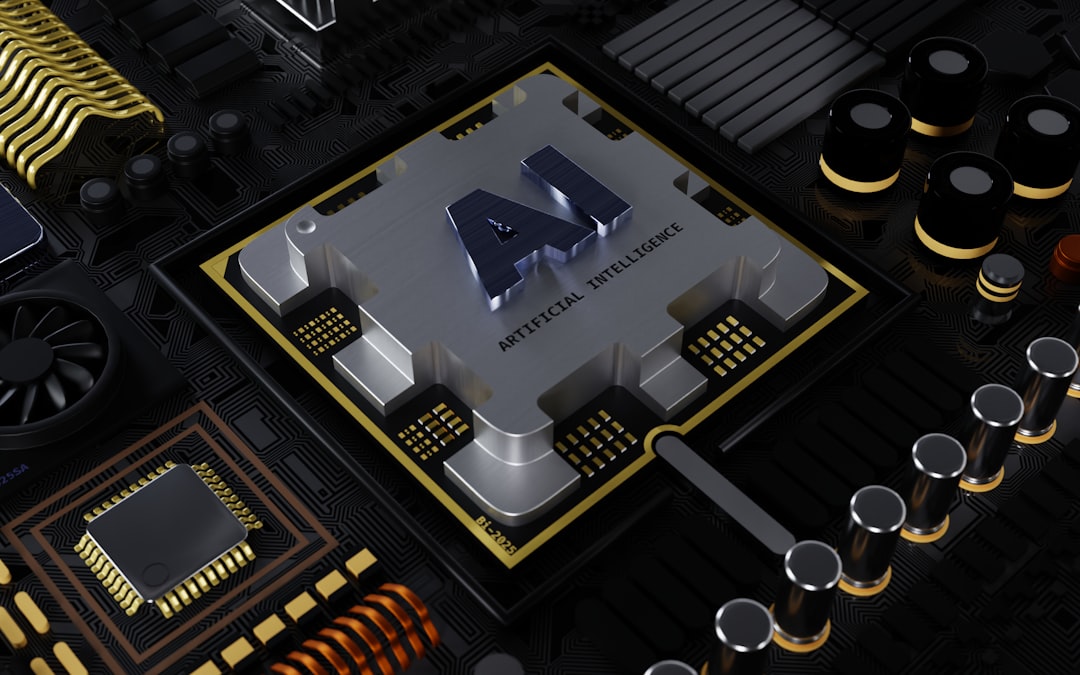
As we enter 2025, educational technology stands at a pivotal moment. The convergence of artificial intelligence, extended reality, adaptive systems, and neuroscience-informed design is creating possibilities that seemed like science fiction just years ago. At Zigchains Space, we're not just observing these trends—we're actively shaping them. This comprehensive analysis explores where EdTech is heading and how we're positioning ourselves at the forefront of this revolution.
AI-Powered Personalization at Scale
The promise of personalized learning has existed for decades, but execution always fell short. Human teachers can't provide individualized instruction to thirty students simultaneously. Previous attempts at computerized personalization relied on simplistic branching logic that quickly became predictable and limiting.
Modern AI changes everything. Large language models combined with learning analytics create truly adaptive systems that understand each student's knowledge state, learning preferences, cognitive strengths, and motivational drivers. These systems don't just adjust difficulty—they reshape entire learning pathways in real time.
At Zigchains Space, our AI tutoring layer operates seamlessly within holographic interfaces. The system observes how students interact with three-dimensional content, noting which angles they examine, which connections they explore, which concepts require repeated visits. This behavioral data trains models that predict optimal next steps for each individual learner.
The result isn't robotic instruction but something approaching expert human tutoring at scale. The AI generates explanations tailored to what you already know, examples drawn from domains you find interesting, challenges calibrated to stretch without breaking. And it does this for thousands of students simultaneously, each receiving genuinely personalized guidance.
Extended Reality: Beyond VR Hype
Virtual reality captured imaginations years ago, but practical educational applications remained limited. Heavy headsets caused discomfort. Isolated VR experiences felt disconnected from curriculum. Development costs made content creation prohibitive. The technology existed; the educational value proposition didn't quite.
In 2025, we're seeing extended reality (XR)—the spectrum from augmented to mixed to fully virtual—mature into genuinely transformative educational tools. Lighter hardware, better spatial computing, and easier content creation have removed technical barriers. More importantly, we've learned how to integrate XR meaningfully into learning rather than treating it as a novelty.
Our holographic platform represents a middle ground that captures XR benefits without requiring specialized hardware. Students access three-dimensional, interactive content through standard devices enhanced with depth-sensing technology. The experience feels immersive without isolating learners behind headsets.
For subjects requiring spatial understanding—anatomy, architecture, engineering, chemistry—this changes everything. Students literally walk through buildings they're designing, manipulate molecular structures with their hands, observe biological processes from inside cells. Abstract becomes concrete; theoretical becomes experiential.
Neuroscience-Informed Design
Educational neuroscience has generated fascinating insights about how brains learn, but translating research findings into practical design principles proved challenging. The gap between laboratory studies and classroom applications remained wide.
That gap is closing. We now understand enough about attention, memory formation, cognitive load, and motivation to create interfaces explicitly designed around neural realities. Color choices aren't aesthetic preferences but calibrated wavelength selections. Information hierarchies reflect working memory limitations. Spacing and retrieval practice are built into content delivery systems.
Zigchains Space embodies this neuroscience-informed approach in every design decision. Our neon blue-green aesthetic emerged from research on alertness and visual processing efficiency. The spatial organization of our holographic interfaces leverages superior memory for location-based information. Adaptive difficulty algorithms incorporate spacing effect principles to optimize long-term retention.
This isn't pseudo-scientific window dressing but rigorous application of cognitive science. Every interface element serves specific neural optimization purposes, creating learning environments that work with brain architecture rather than against it.
Collaborative Learning in Distributed Environments
Remote learning exploded during pandemic disruptions, but initial implementations largely failed to recreate crucial collaborative aspects of in-person education. Video calls provided connection but not genuine collaboration. Shared documents offered asynchronous cooperation without real-time interaction.
2025 brings true collaborative virtual environments. Multiple students can manipulate the same holographic models simultaneously from different locations, seeing each other's actions in real time. Group problem-solving happens in shared three-dimensional workspaces. Peer instruction becomes possible across continents.
Our platform treats collaboration as fundamental rather than supplementary. Every learning environment supports multi-user interaction by default. Students see avatars of classmates, observe their exploration paths, and engage in spontaneous knowledge construction together. Distance becomes irrelevant when everyone shares the same spatial learning context.
This has profound implications for access and equity. Rural students access the same rich collaborative experiences as urban counterparts. Learners from different countries bring diverse perspectives to shared problems. Education transcends geographic constraints.
Continuous Assessment and Feedback
Traditional assessment—periodic exams testing recall under time pressure—provides limited information about actual learning. Students cram information into short-term memory, demonstrate it once, and promptly forget. Teachers receive coarse-grained data too late to inform instruction.
Continuous assessment embedded within learning activities provides richer, more actionable data. Every interaction with educational content generates evidence about understanding. AI systems analyze these interactions to identify knowledge gaps, misconceptions, and mastery in real time.
Crucially, this happens invisibly. Students aren't constantly taking tests; they're learning naturally while systems observe and analyze. When intervention is needed, it happens immediately—adaptive scaffolding appears, alternative explanations materialize, supporting resources highlight—before frustration sets in and misconceptions solidify.
For educators, continuous assessment provides dashboard views of class-wide understanding patterns. Who's struggling with specific concepts? Which explanations proved most effective? Where should instructional time focus? Data-informed teaching becomes possible without overwhelming teachers with analytics complexity.
Competency-Based Progression
Age-based grade levels made administrative sense when education standardized in the industrial era, but they're pedagogically arbitrary. Students learn at different paces; forcing everyone through identical curricula at identical speeds benefits neither fast nor slow learners.
Competency-based education—advancing when you demonstrate mastery rather than when the calendar says so—represents a better model. Technology finally makes this scalable. Adaptive systems can manage individualized progressions that would overwhelm human administrators.
Zigchains Space enables true competency-based learning through continuous assessment and personalized pathways. Students advance when they're ready, spend extra time on challenging concepts without stigma, and skip material they've already mastered. The system tracks competency achievement rather than time served.
This requires rethinking credentials. Rather than diplomas certifying years of attendance, digital badges verify specific competencies. Learners accumulate demonstrable skills throughout their lives, creating comprehensive records of what they can actually do rather than where they sat.
Lifelong and Just-In-Time Learning
The traditional model—extended formal education followed by static career application—no longer reflects reality. Knowledge evolves too rapidly; careers change too frequently. Learning must become lifelong and available precisely when needed.
2025 technologies enable true just-in-time learning. Need to understand a specific concept for a project? Access targeted micro-lessons that teach exactly that, right now, optimized for your existing knowledge. Systems become personal knowledge augmentation, filling gaps on demand rather than requiring comprehensive upfront study.
This shifts education from front-loaded preparation for life to continuous accompaniment throughout life. Learning platforms become permanent resources you consult as needs arise. The distinction between education and work blurs as learning integrates seamlessly into professional practice.
Our holographic interfaces excel in this context. Complex professional knowledge rendered in intuitive three-dimensional representations becomes accessible to practitioners without extensive training. Just-in-time learning doesn't feel like going back to school but like having expert guidance instantly available.
Data Privacy and Ethical AI
All these advances depend on collecting and analyzing learner data, raising critical privacy and ethical questions. Who owns educational data? How is it protected? What prevents discriminatory algorithmic decision-making? These concerns demand serious attention.
Responsible EdTech companies must prioritize privacy by design, not as afterthought. Data should be encrypted, anonymized where possible, and used solely for educational benefit. Students and families deserve transparency about what's collected and how it's used. Algorithmic systems require auditing for bias and fairness.
At Zigchains Space, we've implemented comprehensive privacy frameworks from the start. Data never leaves secure educational contexts. AI models train on aggregated patterns, not individual profiles. Regular algorithmic audits check for demographic biases in recommendations. Students can access and delete their data anytime.
These aren't legal minimums but ethical imperatives. As technology becomes more powerful, the responsibility to wield it carefully grows proportionally. The future of EdTech must be not just effective but trustworthy.
Teacher Empowerment, Not Replacement
Some envision educational technology replacing human teachers. This is both technically infeasible and pedagogically misguided. Teaching involves social, emotional, and ethical dimensions that resist automation. Technology's proper role is augmenting rather than replacing human educators.
The most effective implementations empower teachers to do what only humans can—inspire, mentor, connect emotionally, make ethical judgments—by offloading tasks that technology handles better. Let AI manage personalized practice and assessment. Let holographic interfaces visualize complex concepts. Teachers can then focus on higher-order guidance, classroom community, and individual mentorship.
This requires designing tools for teachers, not just students. Professional development must help educators integrate technology meaningfully. Interfaces should enhance rather than complicate teaching workflow. Success metrics should value educational outcomes over technical sophistication.
Accessibility as Foundation
Too often, accessibility is treated as an afterthought—accommodations bolted onto designs created for idealized able-bodied users. This produces inferior experiences and excludes learners with disabilities from full participation.
Universal design principles demand building accessibility into foundations. Interfaces should support diverse interaction modalities from the start. Content should be perceivable through multiple sensory channels. Navigation should accommodate various cognitive and physical capabilities.
Our holographic system incorporates multiple access pathways. Visual impairment? Spatial audio provides navigation through sound. Motor limitations? Voice and eye-tracking enable control without physical manipulation. Cognitive differences? Simplified interfaces and enhanced scaffolding are available. Everyone accesses the same educational experiences through methods suited to their abilities.
The Road Ahead
These trends represent more than incremental improvements—they constitute a fundamental reimagining of education itself. From passive information reception to active knowledge construction. From one-size-fits-all instruction to truly personalized pathways. From isolated learning to globally connected collaboration. From time-based progression to competency-based mastery.
At Zigchains Space, we're not waiting for this future to arrive—we're building it. Our holographic interfaces, AI-powered personalization, neuroscience-informed design, and commitment to ethical practice position us at the leading edge of educational transformation.
The journey has only begun. As technologies mature and our understanding deepens, possibilities will expand further. But the direction is clear: education is evolving from industrial-age standardization to personalized, lifelong, technology-enhanced learning that respects individual differences while maintaining high standards.
Welcome to the future of education. Welcome to 2025. Welcome to Zigchains Space.